


PrimeKey Analysis Scoring System — Distilled through decades of experience and backed by data


Great property performance isn’t driven by one magic factor.
It happens when multiple fundamentals align.
This is why Navis Atlas' PrimeKey Analysis focuses on 8 factors that have consistently influenced demand, price growth and resilience across market cycles.
Many are curious as to the framework that my co-creator Jackie Mang, and I have created in order to objectively score and grade residential projects in Singapore.
It is an idea that has sat in our minds for many years and finally, it's ready after years of research, debates, designing, testing and seeking the 'bell curve middle ground' for what is widely acceptable as a benchmark for grading properties.
Here are some brief outline of the factors that matter - In another article when available, a little more details will be disclosed but not absolute in every sense, as some part of our work must remain proprietary and not public info, given how common it is that great ideas get stolen and re-branded as originals by larger organisations with strong marketing firepower and zero shame.
We have gone through this many times to know so.
Let's dive in.
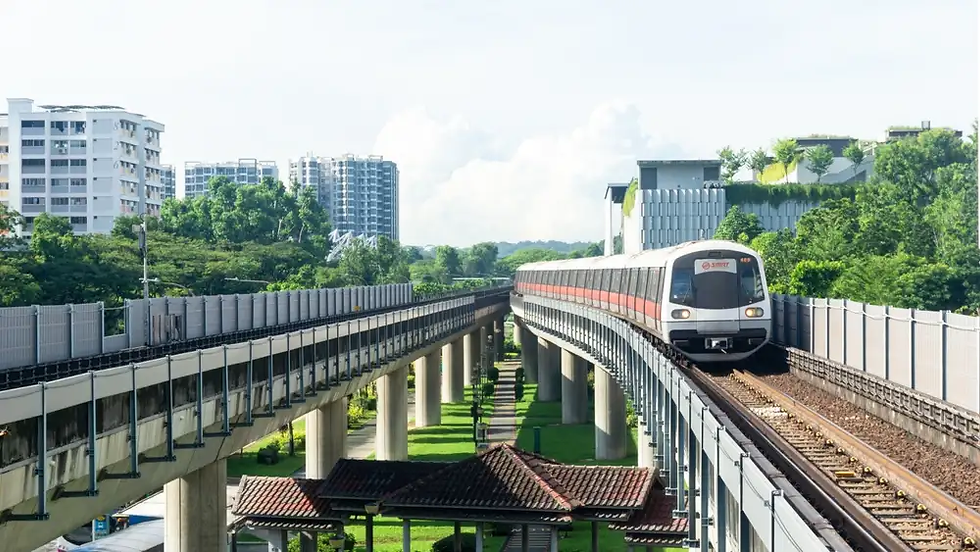
1. Walking Distance to MRT
Why it matters: Transport convenience expands both the tenant pool and resale demand.
Imagine two similar condos in the same district — the one within a 5–7 minute walk to an MRT station typically rents faster and attracts more buyers than one that requires a bus ride. This is especially true for families with children who are of age to independently commute to school and outings.
It is common sense that in our warm and humid climate, walking too much isn't much of an enjoyment except during sunrise and sundown hours. Hence, this is no surprise.
Study shows that approximately 6/10 of the population prefer a maximum of 10 minutes walk to an MRT station. (https://www.straitstimes.com/singapore/transport/less-need-to-have-car-if-its-a-10min-walk-to-public-transport)
● (Based on average walking speed in Singapore of 19m per 10.55 seconds, this works out to estimated 1.1KM. Link: www.richardwiseman.com/quirkology/pace_home.htm)
● For a quick rule of thumb of how long a walk will take, Walking Time = Distance divide by 108. Example 2km distance will take 2000/108 = 18.5 min walk.
● Tenancy demand is also typically higher for projects closer to MRT stations, which helps owners to remain financially comfortable with lower vacancy rates, stronger negotiating power and hence, better bargaining edge when it comes to selling.

2. Remaining Lease Tenure
Why it matters: Properties with shorter remaining leases historically face weaker price growth and financing constraints over time.
This is straightforward as a 99-year leasehold project with 85 years remaining generally holds value better than one with only 55 years left, even if both are priced similarly today. (Unless they have unique properties such as conservation houses, apartments in Tiong Bahru, or have a speculative enbloc potential to them).
This is one of the most considered factor for the typical buyer/investor.
Government housing policies too, play a part.
For example, CPF usage and housing loan quantum are reduced for if a property's lease is too short to cover the buyers' age up till 95 years old. Add to that, in the coming years, we will be facing a tsunami of aged 99-years leasehold condominiums which were launched during the 1980-1990 wave and have less than 60 years remaining lease.
These properties which younger buyers will avoid, and older buyers may not want to fork up for, will face the inevitable situation where valuations and prices start declining more rapidly according to Bala's Curve, relied on by SLA - Singapore Land Authority.

More reading if you're a historical junkie:
In the history of Singapore’s real estate, the shift toward building more 99-year leasehold private condominiums began in the late 1960s and accelerated throughout the 1970s and 1980s.
This transition was primarily driven by the introduction of the Land Acquisition Act (1966) and the Government Land Sales (GLS) program (originally the "Sale of Sites" program) launched in 1967.
Key Historical Milestones
1967: The Turning Point Prior to this year, most private land was freehold or 999-year leasehold. In 1967, the government mandated that all future land sold via the GLS program would have a maximum lease of 99 years. This was a strategic move to ensure land could be "recycled" for future generations in land-scarce Singapore.
The 1970s: The Birth of the "Condominium" The concept of a "condominium" was officially introduced in the early 1970s to encourage high-density living with shared facilities. Early 99-year leasehold examples from this era include Beverly Mai (1974) and Pandas Valley (1978).
The 1980s to 1990s: Mainstreaming Leaseholds As the GLS program became the primary source of land for private developers, the volume of 99-year leasehold projects surged. While freehold land still existed (mostly through private en-bloc sales later on), the vast majority of new private developments outside the traditional "prime" districts began to be 99-year leaseholds.
Next,

3. Nearby HDB MOP Upgrader Pool
Why it matters: HDB upgraders form one of the largest and most resilient buyer groups in the private market regardless of market cycles.
Neighbourhoods with higher numbers of HDB flats reaching their Minimum Occupation Period (MOP) generate natural demand as homeowners look to upgrade within the same estate, a common occurrence across most upgraders.
Bear in mind that this group of HDB upgraders are mostly young, in relevant trending industries, have strong aspirational needs to move up the property ladder, have waited close to 10 years since they booked their BTOs (or more if they are Plus/Prime Location Housing flat owners) and are likely to have been promoted and in senior high paying positions by now.
In good or bad markets, this buyer profile types are the most likely to carry out their private property upgrading plans.

4. Upcoming Government Land Sales Nearby
Why it matters: New launches typically set higher price benchmarks, which can lift surrounding property values and whet the appetites of property sellers around the neighbourhood.
It is human nature to want more for your property when the surrounding replacements cost so much more per square foot.
At the same time, when a nearby Government Land Sale (GLS) site is awarded at a high land cost, older projects in the area often see renewed buyer interest due to relative affordability, propelling interest (and prices) to new record highs.
Over time, many consecutive parcels of land sold by the government has mostly created such impact in its surroundings.
For example, you can observe this phenomenon in areas like Pasir Ris, Punggol, Beauty World and more recently in areas like Tampines, Tengah and Lentor. Land released in stages along with inflationary pressures in labour and raw material costs historically result in higher breakeven prices.
Examples:


5. URA Growth Hotspots
Why it matters: Infrastructure, transport upgrades, and decentralization and re-centralization plans drive long-term demand and capital growth (generally) for properties in the neighbourhood.
Areas identified for transformation — such as new business hubs or transport nodes — tend to experience stronger capital appreciation over time and being located within or near a URA Master Plan growth hotspot historically delivers higher price growth due to infrastructure transformation.
Based on past trends on emerging hotspots, property prices have shown a high correlation of growth when the government invests in infrastructure in the locality.
There are major and minor growth hotspots and investors would do best when investing long term in the major ones where upcoming commercial, residential hubs and amenities are built over time.
Examples:


6. Development Size (Number of Units)
Why it matters: Larger developments benefit from economies of scale, better facilities, and stronger market visibility.
Residents get to enjoy lower density living, a larger variety of facilities, and higher resale transaction volumes, reducing liquidity risks and providing better bank valuation confidence and housing loans as a result.
Thanks to economy of scale, a 1,000-unit project often offers more amenities and lower per-unit maintenance costs compared to a boutique 50-unit development. This can be very attractive to discerning buyers and tenants.
Economies of Scale: Smaller projects do not have the same economies of scale when it comes to the collection of sinking funds and maintenance fees and the cost of upkeep of a development’s facilities, building condition, landscaping, lift, gates etc. This tends to cost each owner more as compared to larger projects. It is a common issue that deters potential buyers from buying boutique projects, and affects the liquidity and exit plans for an investor.
Space & Facilities: Larger developments generally have better and more extensive amenities (e.g., pools, gyms, function rooms). This not only enhances livability but also the project's overall appeal to tenants and buyers over time.
Collective Sales Potential: While not a guarantee, a larger land footprint and unit count can make a project a more attractive candidate for future en-bloc potential.
Liquidity & Market Depth: A larger number of units means a project will have higher awareness in the estate, and provides a steady flow of listings and buyer interest. This makes it easier to secure a buyer at a fair market price without being forced to lower prices.

7. Rental Yield of the Area
Why it matters: Rental yield provides income support during holding periods and market slowdowns.
In areas with consistent tenant demand, stable rental income helps cover mortgage repayments and holding costs. This cash flow cushion allows owners to hold through slower market periods instead of selling under pressure, improving long-term outcomes and giving investors more control over timing their exit.
● Rental trends of a unit type in a project is preferably not declining as it indicates weakness in demand due to aging and maintenance of the project, availability of better competing projects in the vicinity or a lack of audience for a particular room type.
● For example: In OCR areas that are far from an MRT, 1 bedroom rentals might find a lack of suitable tenants due to a mismatch of resident profiles in that neighbourhood.
● It is good practice to research into a project’s tenant catchment factors (International Schools/Business spaces/Offices etc) to find out what type of units best suit the audience staying there.
● Minimum rental yields encouraged should not deviate too much from 3% for CCR, 3.5% for RCR and 4% for OCR.

8. Number of Primary Schools Nearby
Why it matters: Family buyers prioritise school access, which supports owner-occupier demand.
Being within 1km to primary schools helps in enrolment probabilities for families with young kids and provides a consistent demand pool.
Projects located near multiple well-regarded primary schools often see stronger resale demand from parents planning ahead for Primary 1 registration.
Despite there not being any more 'top schools' list in Singapore anymore, there are unofficial lists of top schools, popular schools and standard schools floating around in many parenthood forums.
Many parents have nightmarish stories to share about securing (and sometimes failing) their child a spot in a preferred school, so you can be sure that young families take the proximity of schools (especially ones with good repute) into serious consideration.
In Singapore's competitive education landscape, proximity to reputable primary schools is a powerful and consistent driver of housing demand.
Parents actively seek properties within 1km of their preferred schools to significantly improve their children's chances of securing a place during the Phase 2C registration balloting process. This creates a built-in, recurring pool of motivated buyers, ensuring strong demand and price resilience for well-located properties.
Even if parents are nonchalant about sending their kids to "the best school", the convenience of a school that is within comfortable walking distance is easily a time/money saver.
Guaranteed Demand & Exit Strategy: Properties within the coveted 1km radius of top schools benefit from inelastic demand. Regardless of market cycles, there will always be parents planning for their children's education, providing a reliable exit strategy and a solid price floor for your investment.
Premium Valuation: This high demand often translates into a price premium, as families are willing to pay more to secure a strategic address. This premium persists over time, enhancing the property's long-term capital appreciation potential.

In summary,
No single factor works in isolation. Strong property performance usually comes from multiple fundamental pillars reinforcing each other.
When several PrimeKey pillars align, demand becomes broader, downside risk is reduced, and price growth becomes more likely and consistent over time.
PrimeKey Analysis consolidates these factors into one clear objective score, replacing guesswork with structured, confident decision-making. See how this helps remove guesswork from property investing.
Need an opinion on your property investment plans, the best buys available or help marketing your properties?
Get a 1-time free 30 min Property Wealth Planning consultation with Stuart and his partners. Schedule one right now.
A PWP consultation includes:
- An in-depth financial affordability assessment and timeline planning
- Highly relevant investment insights
- A clear and customised investment road map
- A curated list of best buys in today's market with good growth potential & minimal risks
- Selecting units with the highest potential in a new launch project
- Advice on marketing and getting a buyer for your property fast

Stuart Chng is the Managing Partner of Navis and Chief Agency District Director at Huttons and the co-creator of Navis Atlas and PrimeKey Analysis.
He adores music and can play a few instruments decently without upsetting his neighbours. When not doing so, he enjoys pillow fighting with his son and coming up with silly puns which barely amuses his wife.
Professionally, he is a licensed real estate agent, avid investor in options, stocks and real estate, team leader, speaker and columnist for several property newsletters and blogs and is often quoted in media interviews on 938FM, Channel 8, PropertyReport, PropertyGuru and other publications.
Throughout his career, he has helped many clients grow their wealth through selecting great real estate investments and managing their portfolios actively. Read his clients' reviews here.
Stuart has also coached many top million dollar producing agents from top Singapore real estate agencies. Read his agents' reviews here.
Related readings:



Comments